

A journey of a thousand miles begins with a single step.
---- Lao Tzu
Most of the challenges I have faced in life have been bigger than myself – with dimensions running broader and deeper than my personal life and well-being. Some of these – growing up, the Vietnam War and the draft, soul-searching, the challenge of law practice -- have been almost larger than life itself and shared by many in my generation. Most of the events, the encounters and challenges I’ve faced in my existence to this date are of a piece with the rest of humanity. Those blessings that have come my way, no less than the challenges and the mysteries I’ve encountered along my path, are but part of what I see as the universal human story and the human condition. Indeed, in the long arc of time and well beyond my short spell of time on earth, my particular story is but part of the universal human condition.
And what is your story, dear reader? What is your odyssey, at whatever stage of the journey you may have reached? Often, while out on my morning walk through some old and familiar neighborhoods, I wonder about former friends, family and relatives who once resided nearby. And my classmates, now of fond and distant memory… where have they gone? What have they done with their lives? Where have their odysseys, their quests and adventures taken them? Who has found serendipity and love? Happiness and joy? Who has met with rainy days? Misfortune? Or death? What blessings have come their way? What fates or destinies?
If as with myself, you view life as a journey of adventure, of challenge and discovery, then you too are on an odyssey and a quest of your own. What perils, what challenges and pitfalls have you encountered along life’s paths? Every one of us is on a journey, on some quest in search of meaning and, more specifically, something to live for --, something bigger and better than ourselves. While not always declared out loud to the world, we all seek a purpose or a reason to live. And all of us face obstacles and challenges along the way – the ways of our quests and journeys, our odysseys. And we are in a real sense all of the same family as wily Odysseus on his epic journey homeward to Ithaca from the battles of Troy – encountering the gods and the perils nature over land and sea.
Indeed, our personal stories are interwoven, part a whole cloth, each of them a thread in the larger story of humanity. Your lives and mine are but a microcosm of a bigger world and a bigger picture -- the journey and the odyssey of humanity. On the world stage, the life adventure of each of us is not unlike the story of individual nations and races and peoples over the march of time. My life -- however storied or un-storied, intrepid or mellow -- is but a brief spell of time on earth – not unlike the tip of an iceberg extending far and wide, broader and deeper and much older than my personal story.
To explore the metaphor and concept of an odyssey in its full application to human history is beyond the scope of this memoir. However, history is itself a story, the narrative of peoples, of nations, and of journeys -- mostly in quest of a better life and a better world. At whatever the time and the place we choose, we see a journey of peoples and races, of nations and groups, both individually and collectively over the march of time. Every journey, every migration of peoples has been an odyssey in quest of some objective, of some meaning or goal -- if only that of a better life for those who undertook the risk. Well before and after Homer committed to writing his epic poem of Odysseus on his journey homeward from war, we see the same pattern, the same archetype, the same quest and journey in the stories of all humankind. The story of Odysseus and The Odyssey is, in the bigger picture, but a story of the human race in microcosm. It is a story about us: you and me.
In the West alone, we can draw many and varied stories of quests and journeys from the Bible, itself in good part the narrative of a people – a people on a long journey forward from the patriarchs, through thick and thin, to a promised land and the birth of a nation. Consider the story of God’s call to Avraham, a call to go forth from the idol-worshiping land of his birth to a new land, a new life, and a new people:
Go from your country, your people and your father’s household
to the land I will show you.
--Genesis 12:1
Avraham’s journey follows with the continuing saga of the patriarchs - Isaac, Jacob, Joseph and their progeny, together with all the encounters, the challenges, the perils of their wandering – on a 40-year journey through the desert to a promised land. God’s calling Avraham to leave Ur, his sojourn in Egypt and growing prosperity, his mission to enable Isaac’s quest for a wife, Jacob’s long and convoluted series of episodes – all of these stories together, along with the subsequent stories in Genesis and Exodus, are but journeys and quests and odysseys of one sort or another. The stories in the Exodus, the release and redemption of a people enslaved for centuries by the Pharaoh, their years of wandering through the desert, together with all their misgivings and the perils of war along the way, are all directed to the quest for the promised land. It is probably no exaggeration to add that much of Jewish history – the long exile, the sufferings, and the return of a people in our times to their national homeland in the State of Israel – mirrors the journey of much of humanity. It has been a journey, a quest, an odyssey homeward from an exile lasting centuries for the Jewish people. In 1947, it was a homecoming of epic proportions to a promised land of their own.
But such is the story of many peoples, of sages and saints. The stories of Moses, of Jesus, of the Buddha, of other spiritual leaders down through the ages and well into our own day, have all exemplified an odyssey of one sort or another. We could narrate their stories and histories, their journeys, encounters, and quests in a way not unlike that of Homer’s Odysseus: fraught with challenge and peril -- together with hope, arrival and success.
The history of most peoples and nations is a story wanderings and waves of immigration, of settlement and the birth of nations. The early explorers, their crossings over land and sea followed by the waves of immigration westward to a new world, is a case in point. The continued journey of American settlers westward, of the early pioneers who settled the West -- evidencing a “manifest destiny” from “sea to shining sea” – is but a continuing saga in the odyssey of those who first arrived on American shores. It is, in a larger sense, a chapter in the history of all peoples, of nations and humankind.
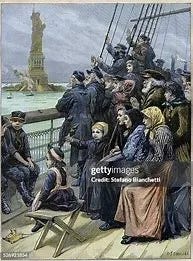
For more than 250 years – two and a half centuries and well into modern times – immigrants to the United States have traversed land and sea on a once-in- a-life time journey to freedom, an odyssey singular and profound in history, to pursue their dreams of a brighter future in America. They did so for themselves, their families and, often, for their own survival. They often fled for their lives, endured risks, loss, and peril of all kinds in their journey over land and sea, in quest for what they saw (rightly or wrongly) as a promised land in America -- their Ithaca at the end of a journey not unlike that of Odysseus on his homecoming from adversity and war. They believed, with all their hearts and minds, that America was a land rich with freedom, with opportunity and the promise of a better life. They arrived with their meager possessions -- not much more than their backpacks -- at Ellis Island or San Francisco Bay. They had little more than each other, a few dollars in their pockets, and their deep yearnings to be free. Whether realistic or not, that fact also qualifies as a quest, a story and an odyssey, together with the hope for a better life at the end of a long adventure fraught with peril. It also qualifies as a kind of miracle, a dream come true and, for many at least, the promise of a long and a bright future ahead for themselves and their progeny.
Yet again in twentieth century America, the Great Migration of Negroes from the rural South into the urban, industrial North is another epic story. American Negroes were in search of greater freedom, economic opportunity and, in general, the pursuit of a better life for their families and their progeny. Their odyssey continues into our own days with freedom marches, the fight for equality, and continuing efforts in the civil rights movement, begun in the 1960s and continuing today in the Courts and legislative halls. Their journeys, their obstacles and challenges, their hopes and dreams are nothing less than an odyssey of struggle and progress toward more equitable laws and the fulfillment of a quest for a more democratic and participatory society.
Taken in reverse and from a different perspective – in a movement from the New World to the Old -- we see the same archetype of an odyssey in the defense of freedom. Witness the allied forces of World War II in efforts rescue the enslaved peoples of Europe in 1944. The D-Day landings on the beaches of Normandy remain in vivid memory for the survivors and families of allied airmen and soldiers – some still living today -- creating an indelible image of the New World on an odyssey and a mission to save the Old from the dark shadow of advancing oppression.

D-Day landing 1944
History is abundant with similar odysseys of eventful quests and journeys. Ferdinand Magellan’s expedition to circumnavigate the globe on his voyage, in 1519-1522, was perhaps the first successful attempt to prove that the Earth was round. Marco Polo, on his Silk Road journey in 1271 to 1295, as related in the Travels of Marco Polo, documented his experience in the court of Kublai Khan. The Lewis and Clark Expedition of 1803 – 1806, exploring virgin lands west of the Mississippi, mapped out vast territories for the young United States. Charles Darwin’s journey aboard the HMS Beagle in 1831-1836, his observations of life in the Galapagos Islands, and his quest for the origins of species, led to his discoveries and development of the theory of natural selection and evolution.
Other examples of quests, of odysseys and journeys abound. Journalist Nellie Bly, inspired by the novel Around the World in 80 Days, completed a trip around the world in 1889 in 72 days via a combination of steamship and rail travel. In 1927, Charles Lindbergh became the first person to fly solo across the Atlantic Ocean. In 1969, astronauts Neil Armstrong and Buzz Aldrin completed a monumental journey into space, becoming the first humans to walk on the Moon. These quests, along with all of our various journeys, adventures, and discoveries will continue. Our wonders and curiosities, yours and mine together along with the challenges calling forth the best in ourselves in the likes of Odysseus, will continue.
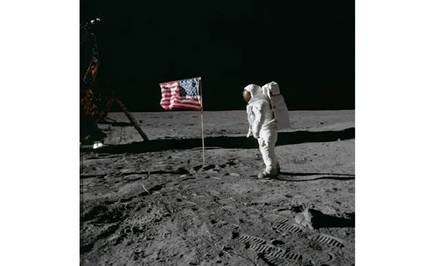
Moon Landing, 1969
* * * * * * * * * *
As always, your comments, questions, opinions, and any further discussion you might want to add are very welcome. I encourage you to submit any comments for further discussion to the Comments section of this piece on the Substack platform.